
Appomattox County Bench Warrants Explained
“Bench warrant” is a familiar term for court process after a missed appearance or violation. Virginia materials may call it a capias, show-cause summons, or FTA warrant. A missed date, bond condition, probation matter, contempt issue, or support order can lead to different process depending on the court and underlying case.
Do not assume every missed date creates the same arrest document. The clerk can tell you what the judge ordered and which office controls the next step.
Appomattox County DC-361 Bench Warrant Terms
The Virginia district form DC-361 is titled “Capias: Attachment of the Body.” It can state the jurisdiction, court, statutory reason, underlying case, and bail direction. A capias is not the same as a new arrest warrant for a new charge, and an order to appear by show-cause summons is not automatically an arrest process.
- Capias
- Process directing that a person be brought before court.
- Show-cause summons
- A notice to appear and explain an alleged violation.
- Recall of process
- A court action directing return of unserved process.
- FTA
- Failure to appear, with consequences set by the case and court.
How Appomattox County Bench Warrants Are Issued
The judge reviews what happened in the pending case and chooses the process allowed for that charge and court order. The result may be a capias, show-cause summons, or FTA warrant. A clerk records the case action, and a service copy may go to the Sheriff's Office. Virginia law requires certain felony process to enter internal VCIN/NCIC, which is not a public search system.
Appomattox GDC's Wednesday criminal and traffic sessions help identify the proper clerk, but a published docket schedule does not promise same-day warrant handling. Call before appearing.
Appomattox GDC Bench Warrant Missed-Date Process
For an adult traffic, misdemeanor, or town-ordinance case, begin with the Appomattox General District Court Clerk. The court publishes Wednesday criminal and traffic sessions, including a Wednesday morning advisement period. Ask whether the file shows a new date, DC-360 show-cause summons, DC-361 capias, misdemeanor FTA warrant, or another order. Do not treat the calendar as an unscheduled walk-in appearance window.
The court image shows the official clerk and docket route. Use the case number when calling about a missed appearance.
See the Appomattox General District Court page for the court's published contact information.
Appomattox County Bench and Arrest Warrants Compared
A bench-type process follows a court obligation in an existing case. An arrest warrant begins with a probable-cause allegation. Both can authorize arrest, but their trigger and record route differ. The exact form and order matter more than the shorthand label.
| Feature | Bench Warrant | Arrest Warrant |
|---|---|---|
| Trigger | Missed appearance, contempt, or violation | Probable cause of an offense |
| Issuer | Judge handling the existing case | Magistrate or other authorized judicial officer |
| Case stage | Usually an existing case or order | New or pending charge |
| Next step | Ask about appearance, recall, or compliance | Ask about counsel, bond, and court appearance |
Appomattox Circuit Bench Warrant Process
The court named on the record sets the route. GDC handles traffic, adult misdemeanors, town and county ordinances, and preliminary felony hearings. Circuit holds felony trials and circuit criminal files. The same missed setting does not mean a GDC clerk can recall Circuit process or that a Circuit case belongs in the traffic payment system.
| Court | Process Route | Clerk |
|---|---|---|
| General District | Adult traffic, misdemeanor, town ordinance | (434) 352-5540 |
| Circuit | Felony trial and circuit criminal case | (434) 352-5275 |
| JDR | Juvenile, family, support, related matters | (434) 352-8225 |
Resolving an Appomattox County Bench Warrant
Call the issuing clerk before paying or arriving at the courthouse. The clerk can identify the recorded process and tell you whether a scheduled appearance, attorney filing, judge's action, or magistrate review is required. A lawyer can help plan a voluntary appearance or request to recall process.
- Use OCIS or the court paper to identify the issuing court and case number.
- Call that clerk and ask which process is on file and what appearance the judge requires.
- Ask counsel whether a motion to recall or another filing fits the case.
- Confirm any payment, bond, new setting, and later status update with the court.
Caution: Do not assume a capias expires or that a payment removes it; confirm the court's action and any remaining hearing with the issuing clerk.
Appomattox County Bench Warrant Bail Questions
District 10 Magistrate Services is the judicial-officer channel for new process and bail decisions. It is not a public warrant roster and does not replace the court clerk's docket. Ask whether a capias carries court-set bond terms, where a bond may be accepted, and whether a judge must act first. Appomattox does not publish a local bond schedule or accepted payment method.
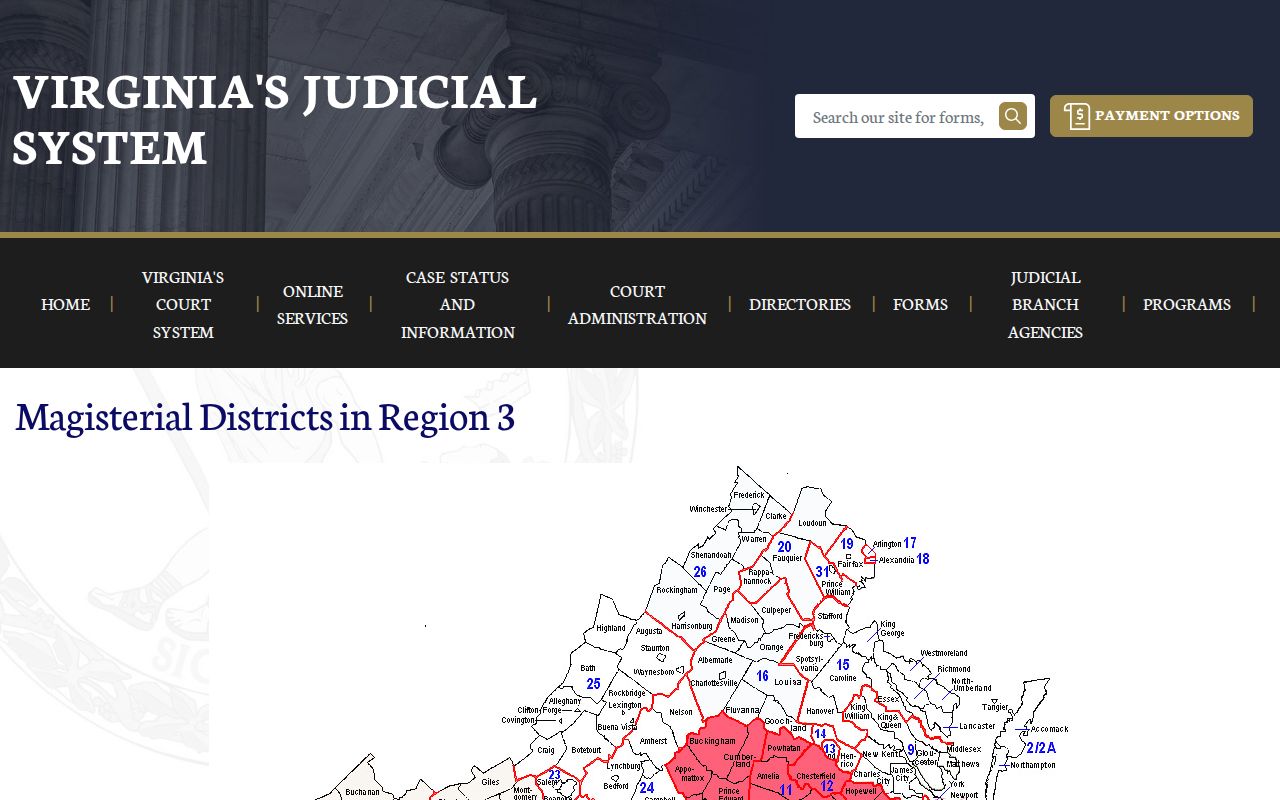
The official magistrate page shows the regional office listing. Call before traveling because no walk-in bond counter or after-hours procedure was found.
Finding the Appomattox County Bench Warrant Court
Appomattox has separate Circuit, General District, and JDR clerk routes, not a separate municipal court. GDC handles adult traffic, misdemeanors, and town ordinances. Circuit holds felony files and circuit process. JDR covers juvenile, family, support, and related matters, with confidentiality limits.
The court that issued the process controls a recall or new setting; the Sheriff serves process but does not dismiss the case. Use the Appomattox warrant lookup to locate a public case, then call its clerk.
Appomattox JDR Bench Warrant Show-Cause Process
JDR handles juvenile delinquency, adult matters assigned to that court, support, custody, and related family process. It publishes Thursday criminal and delinquency sessions, but support and custody use separate calendars. Ask the JDR Clerk what information can be shared and which court action is required instead of assuming OCIS will show the full record.
The JDR court page provides the court-specific contact route. Its privacy limits remain in force even when a family member is helping.